


Across the Gulf region, brands are facing a familiar challenge: how to explain complex ideas, large-scale visions, or intangible experiences in a way that is instantly clear and globally competitive. Whether it is a master-planned real estate development, a new infrastructure project, or a technology-led service, traditional visual formats often fall short. In response, many organizations are turning to immersive visuals. In 2026, 3D animation and virtual reality are no longer experimental tools in the Middle East; they are becoming central to how Gulf brands communicate, persuade, and scale.
Why This Topic Matters Today
Dubai and the wider UAE have positioned themselves as global innovation hubs. With ambitious national visions, rapid urban development, and increasing international investment, brands in the region are expected to communicate at a world-class level.
This expectation has accelerated demand for specialised 3D animation studios in Dubai and VR studios across the UAE. Immersive media allows brands to present ideas before they physically exist, align stakeholders early, and reach global audiences with clarity. As competition intensifies across sectors such as real estate, infrastructure, energy, tourism, and gaming, immersive media in the Gulf has become a strategic differentiator rather than a creative luxury.
What Immersive Visuals Really Do
At its core, immersive visual communication reduces ambiguity. 3D animation transforms complex data, processes, or spatial designs into understandable narratives. Virtual reality takes this a step further by allowing viewers to experience environments from within.
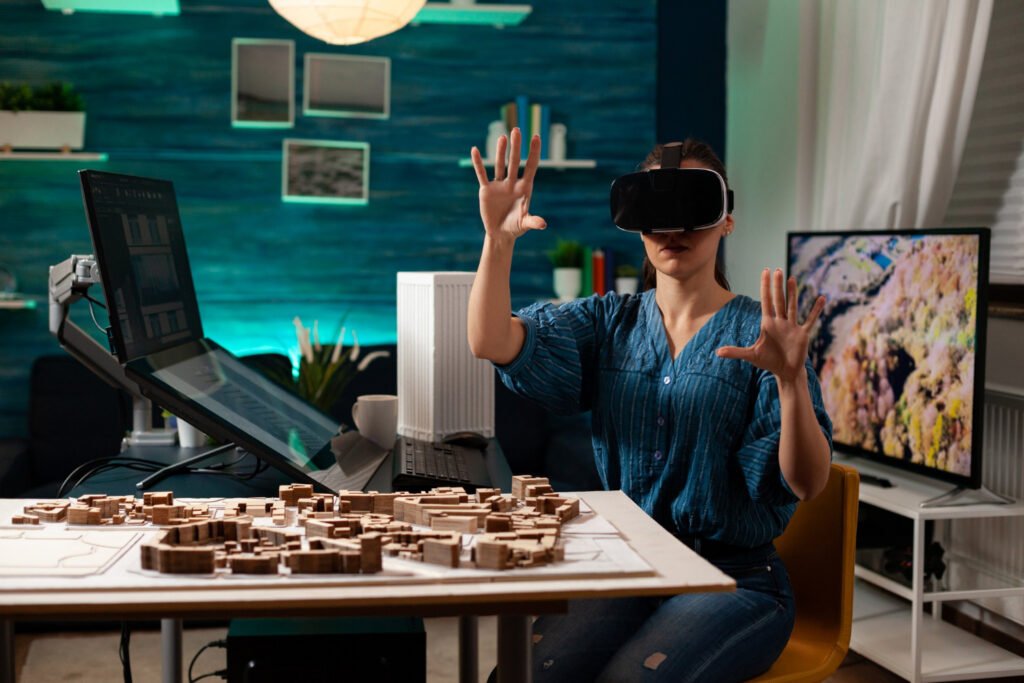
For Gulf brands operating at scale, this clarity has practical value. Investors understand projects faster. Decision-makers align earlier. Customers engage more deeply. A virtual reality company in Dubai is not simply producing visuals; it is enabling understanding and confidence across diverse audiences.
In 2026, the role of immersive visuals is less about spectacle and more about precision. Effective 3D visualization in the Middle East focuses on accuracy, realism, and narrative flow, ensuring that visuals support strategic communication goals.
How Gulf Brands Are Using 3D Animation to Scale
Real Estate and Urban Development
One of the most prominent applications of 3D animation in Dubai is within real estate and large-scale urban projects. Developers use high-fidelity animations to showcase master plans, interiors, infrastructure, and lifestyle experiences long before construction is complete.
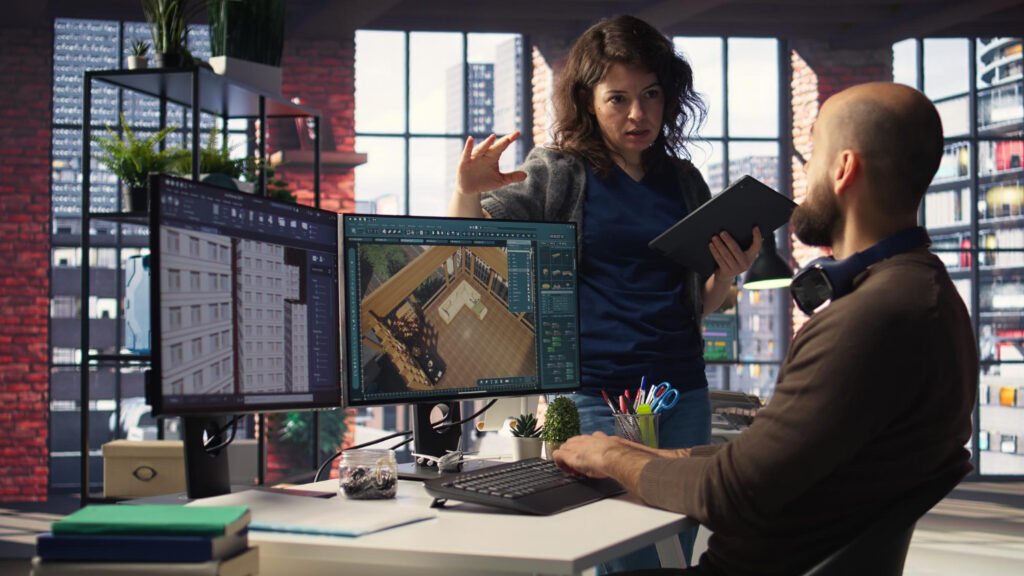
These visuals support faster approvals, international sales, and stakeholder alignment. Instead of relying on drawings or static renders, animated walkthroughs provide context and scale, helping global audiences understand the vision instantly.
Infrastructure, Energy, and Industrial Sectors
Across the Gulf, infrastructure and energy projects are complex and capital-intensive. 3D visualization helps explain engineering processes, safety systems, and operational workflows to non-technical audiences.
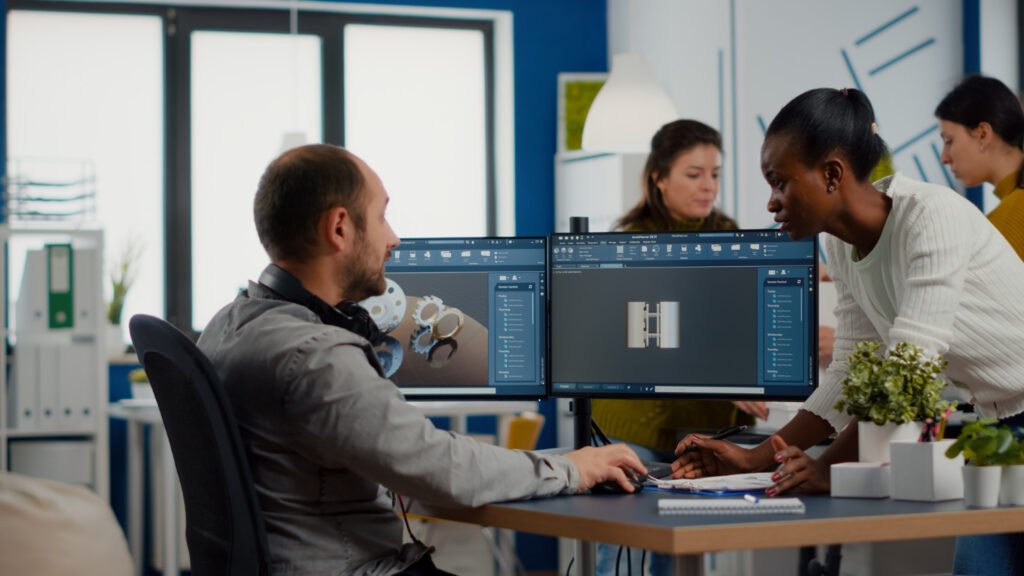
For these sectors, immersive media is a communication tool that builds trust. It allows governments, partners, and investors to see how systems work, reducing uncertainty and supporting informed decision-making.
Technology, Training, and Simulation
Virtual reality studios in the UAE are increasingly supporting training and simulation use cases. From operational training to safety induction and process familiarisation, VR enables experiential learning that is consistent and scalable.
For organisations with distributed teams or high-risk environments, this approach improves retention, reduces training time, and standardises understanding across regions.
The Rise of VR Studios in the UAE
The growth of VR studios in the UAE reflects a shift in how brands think about engagement. Virtual reality is no longer confined to exhibitions or demonstrations. It is being integrated into sales, onboarding, and internal communication.
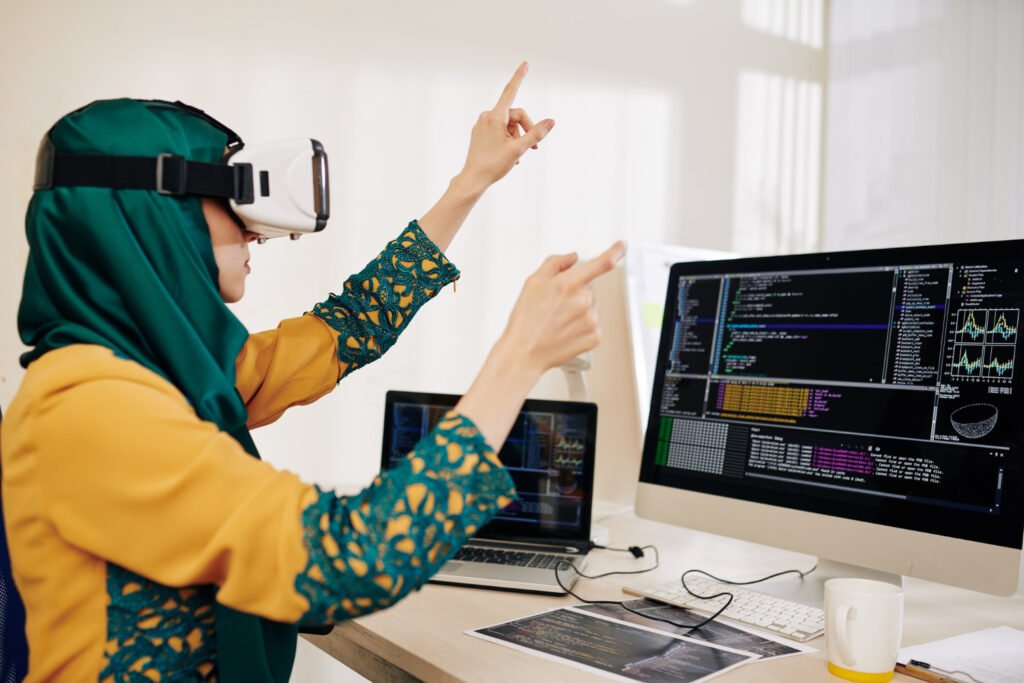
A well-structured VR experience allows users to explore spaces, interact with elements, and absorb information at their own pace. This autonomy increases engagement and comprehension, particularly for international audiences unfamiliar with regional context.
In Dubai, virtual reality companies are increasingly expected to combine technical capability with narrative intelligence. The technology itself is no longer the differentiator; how it is applied is.
Immersive Media and the Gaming Influence
The gaming animation studio sector in the UAE has also influenced how immersive visuals are produced. Techniques developed for gaming, such as real-time rendering, interactive environments, and performance optimisation, are now being applied to brand communication.
This crossover has raised expectations for quality and interactivity. Brands using immersive media in the Gulf now look for experiences that feel intuitive, responsive, and polished, rather than purely demonstrative.
As a result, immersive media is becoming more user-centric, focusing on how audiences navigate and interpret visual information.
Choosing the Right 3D and VR Partner
As demand grows, so does the need for discernment. Not every 3D animation studio in Dubai or VR studio in the UAE approaches projects strategically. For brands aiming to scale faster, the right partner is one that understands business objectives, audience context, and long-term usability.
Key considerations include the studio’s ability to handle complexity, maintain visual accuracy, and structure immersive experiences around clear narratives. Strong creative direction ensures that visuals remain purposeful rather than decorative.
Our Perspective
At Studio Image Works, immersive visuals are treated as communication systems, not isolated outputs. Whether through 3D animation or virtual reality, the focus is on translating complex ideas into clear, scalable visual narratives.
The studio’s approach to immersive media in the Gulf emphasises realism, structure, and intent. By aligning visual storytelling with strategic objectives, immersive content becomes a tool for faster understanding, better alignment, and confident decision-making across global audiences.
The Result
In 2026, 3D animation and virtual reality are reshaping how Gulf brands communicate and scale. Dubai’s role as a creative and technological hub has accelerated the adoption of immersive visuals across industries, from real estate and infrastructure to training and gaming.
For brands operating in the Middle East and beyond, immersive media offers more than visual impact. It provides clarity, reduces friction, and supports faster growth by enabling audiences to truly understand what is being built, offered, or imagined.
As immersive communication continues to evolve, its value will lie not in novelty, but in how effectively it helps brands turn vision into shared understanding.