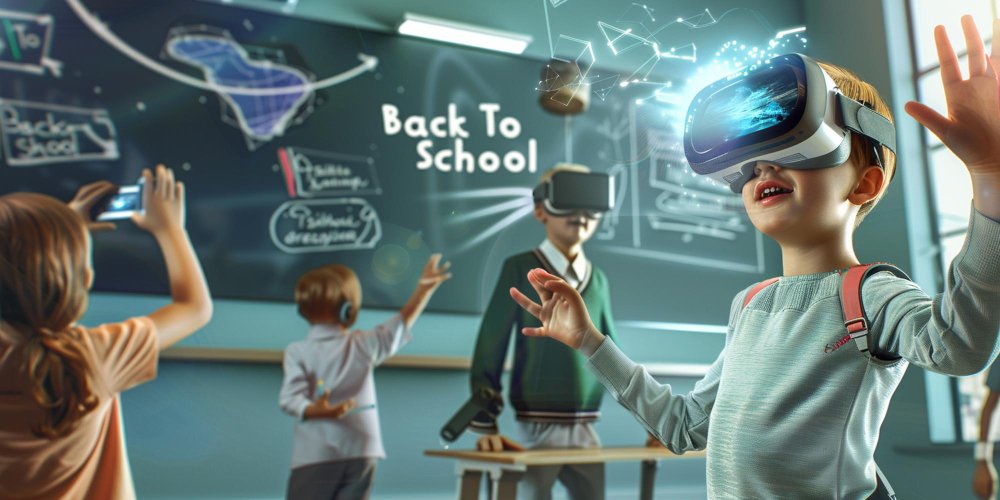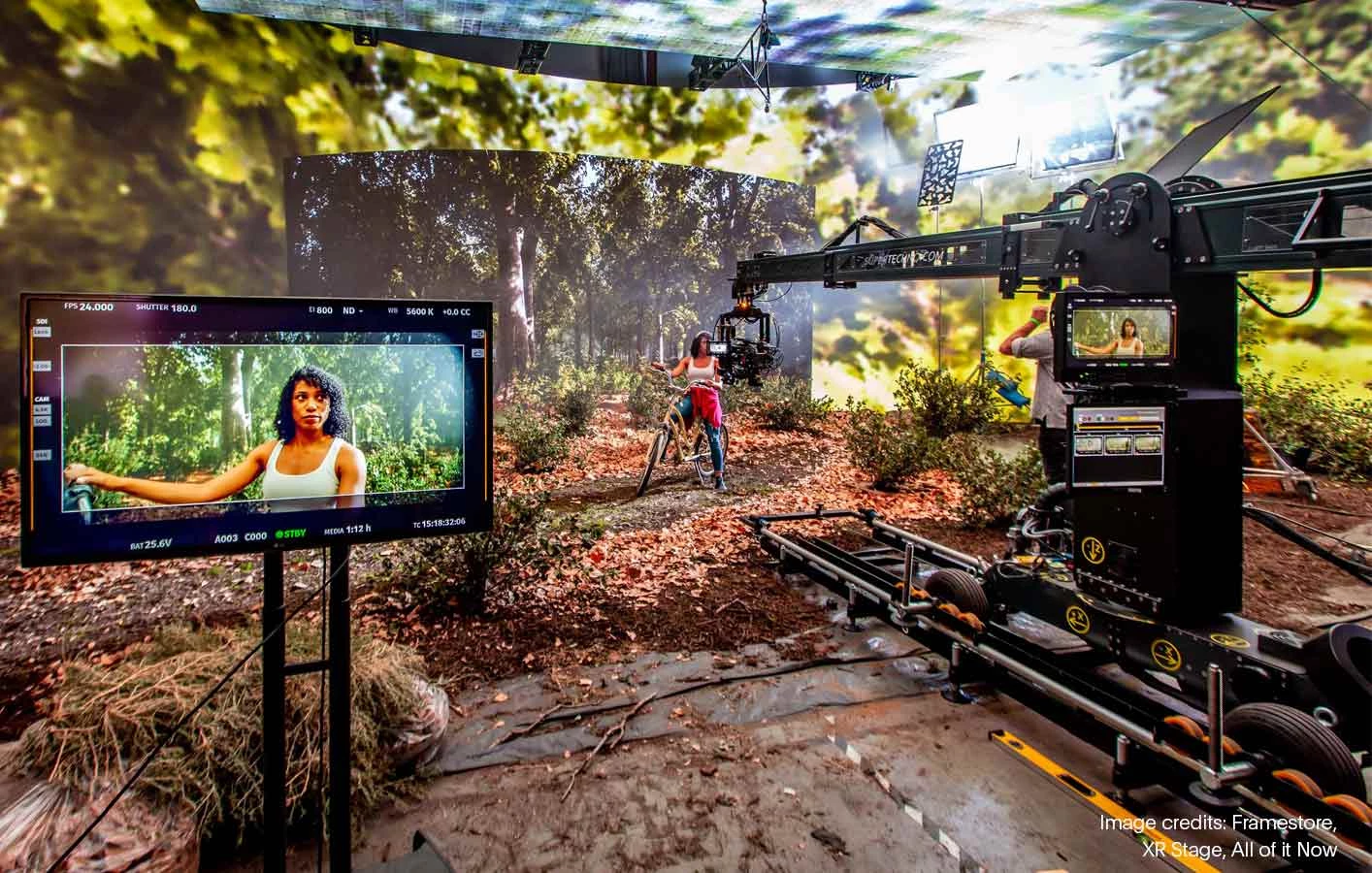


Across the Gulf region, organisations are increasingly confronted with a common communication challenge: how to prepare people, engage audiences, or explain complex environments without physical access. Whether it is training teams for high-risk operations, launching interactive brand experiences, or developing next-generation gaming content, traditional formats often fall short. Virtual reality has emerged as a practical response. In 2026, VR solutions in the Gulf are no longer experimental technologies; they are becoming embedded tools for learning, engagement, and scalable communication.
Why This Topic Matters Today
The Gulf is undergoing rapid transformation across sectors such as entertainment, education, infrastructure, tourism, and technology. National initiatives and private investment are accelerating innovation, while organisations are expected to operate at global standards.
In this environment, VR solutions in the UAE and wider region offer a way to communicate ideas and experiences with clarity and consistency. Virtual reality enables organisations to simulate environments, standardise training, and create immersive brand experiences that can be deployed across locations. As markets like Saudi Arabia and the UAE continue to scale, VR has become a strategic medium rather than a novelty.
What Virtual Reality Delivers
Virtual reality places users inside a simulated environment, allowing them to interact with spaces, objects, and scenarios. Unlike traditional visual media, VR creates presence. Users are not observers; they are participants.
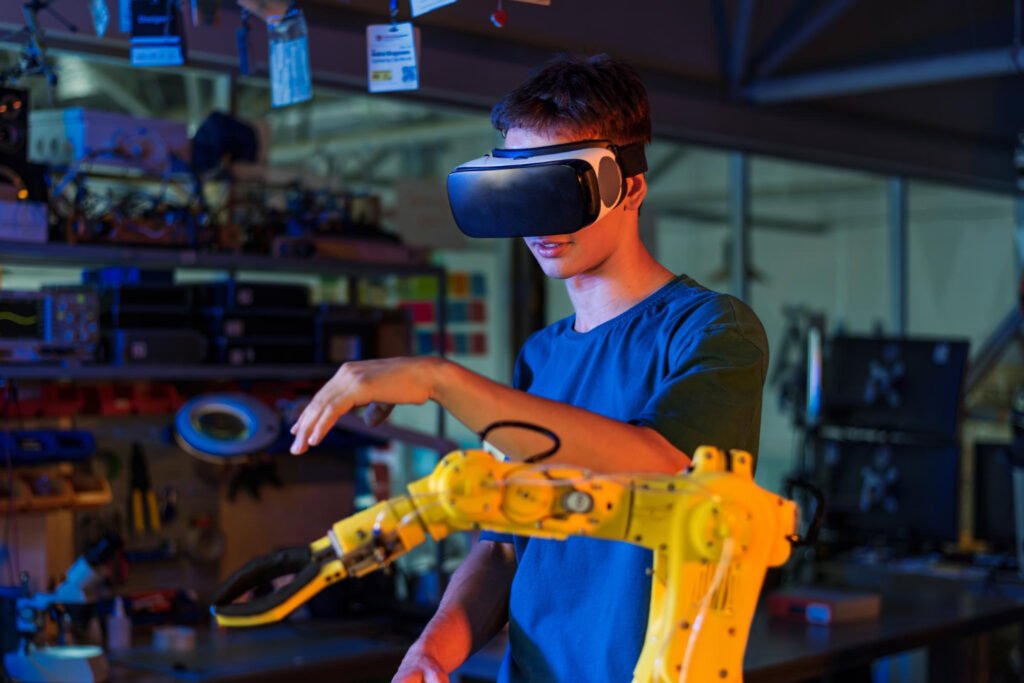
This sense of presence is what gives VR its value. In training contexts, it allows individuals to experience situations safely before encountering them in reality. In gaming, it increases immersion and engagement. In brand experiences, it transforms messaging into interaction.
For organisations in the Gulf, VR provides a controlled, repeatable way to deliver complex experiences at scale. The technology itself is only one part of the equation. Effective VR solutions combine technical execution with clear narrative structure and purpose.
VR Gaming in the Middle East
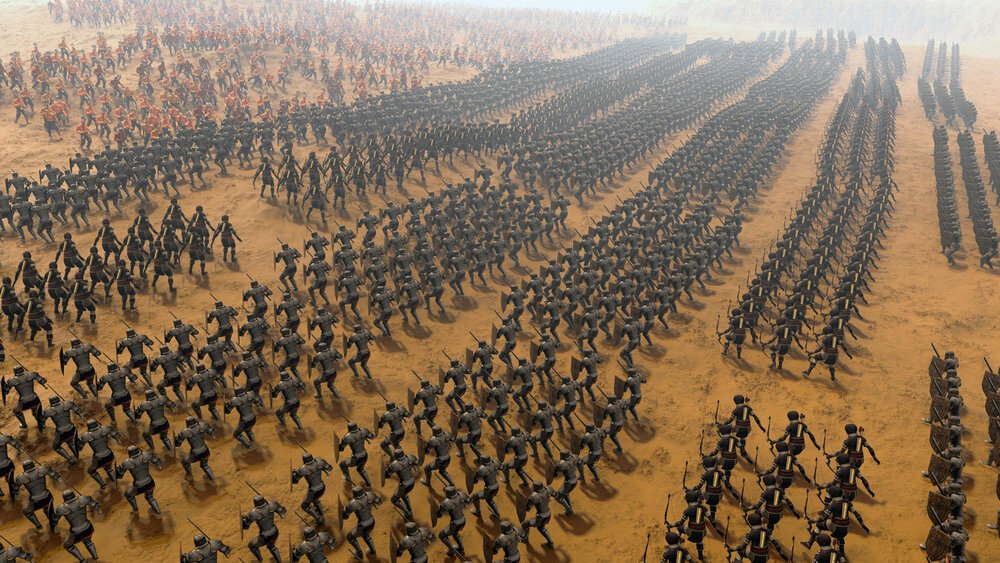
VR gaming in the Middle East has grown alongside investments in digital entertainment and esports. Gaming studios and developers are using VR to create more immersive worlds that appeal to both regional and global audiences.
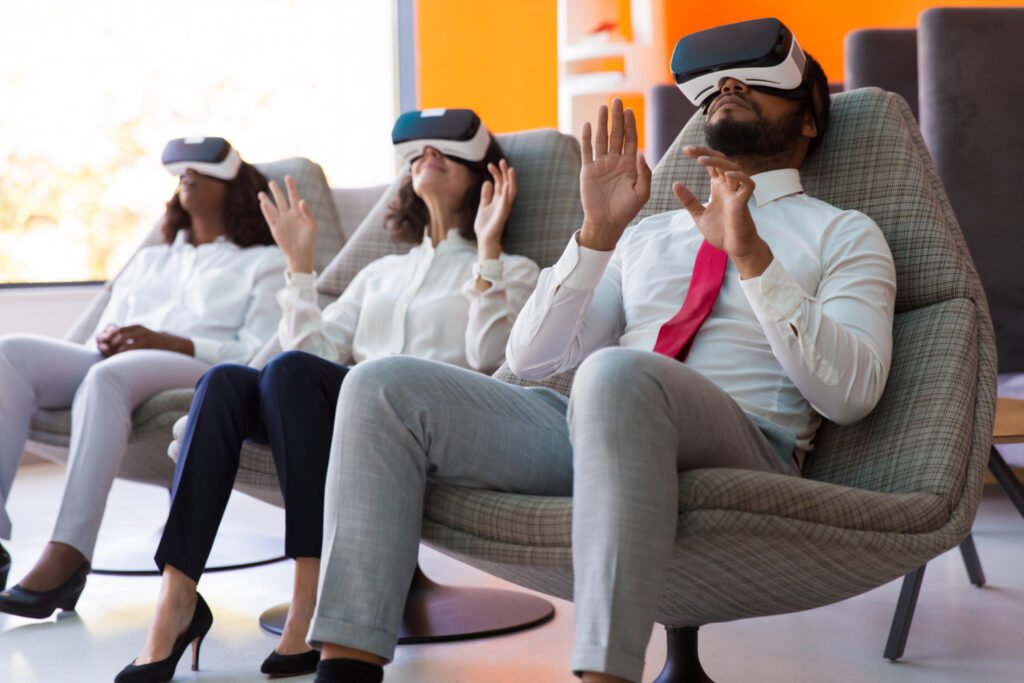
In the Gulf, VR gaming is not limited to consumer entertainment. Location-based experiences, immersive arcades, and cultural gaming experiences are becoming part of tourism and leisure developments. These experiences rely on high-quality visual realism, intuitive interaction, and performance optimisation.
The influence of gaming has also shaped expectations for VR across other sectors. Users accustomed to responsive, immersive gaming experiences expect the same level of quality from training simulations or branded environments.
VR Training in Saudi Arabia and the UAE
One of the most impactful applications of virtual reality in the Gulf is training. Industries such as energy, construction, aviation, healthcare, and manufacturing face challenges related to safety, complexity, and standardisation.

VR training in Saudi Arabia and the UAE allows organisations to simulate real-world scenarios without risk. Employees can practice procedures, navigate environments, and respond to situations repeatedly until competence is achieved. This approach improves retention, reduces training time, and ensures consistency across teams.
For organisations operating across multiple sites, VR training provides a scalable solution. The same experience can be deployed across regions, ensuring that standards are maintained regardless of location.
Immersive Brand Experiences in the Gulf
Beyond gaming and training, immersive experiences in the Gulf are increasingly used for brand communication. Virtual reality enables brands to invite audiences into their world rather than presenting information passively.
Developers, hospitality brands, and cultural institutions use VR to showcase destinations, properties, and concepts before they exist. This is particularly valuable for international audiences who may not have physical access.
In brand experiences, VR shifts the focus from messaging to exploration. Users engage at their own pace, building understanding and emotional connection through interaction rather than instruction.
Designing Effective VR Solutions
Successful VR solutions in the UAE and across the Gulf are built on more than technical capability. They require careful planning, clear objectives, and thoughtful design.
Key considerations include user experience, narrative flow, and realism. The environment must feel intuitive, interactions must be purposeful, and visuals must support understanding rather than overwhelm it.
In 2026, the most effective VR projects are those that align immersive experiences with business or communication goals. Whether the objective is training efficiency, audience engagement, or brand clarity, VR content must be structured accordingly.
Choosing the Right VR Partner
As demand for VR grows, organisations must evaluate partners carefully. Not all VR studios approach projects with the same level of strategic discipline.
The right partner understands the context in which VR will be used, the audience it serves, and the long-term value of the experience. This includes considering scalability, updates, and integration with other communication tools.
For Gulf organisations operating at scale, VR solutions must be robust, adaptable, and aligned with broader digital strategies.
Our Perspective
At Studio Image Works, virtual reality is approached as a communication medium rather than a technical showcase. Each VR experience is designed to solve a specific challenge, whether that is training clarity, audience engagement, or experiential storytelling.
The focus is on creating immersive experiences that are structured, intuitive, and aligned with real-world objectives. By combining visual realism with clear narrative intent, VR becomes a practical tool for organisations across the Gulf.
This approach reflects a belief that immersive technology is most effective when it serves understanding, not spectacle.
The Result
In 2026, virtual reality solutions in the Gulf are reshaping how organisations train teams, engage audiences, and create interactive experiences. From VR gaming in the Middle East to VR training in Saudi Arabia and immersive brand experiences across the UAE, the technology is being applied with increasing maturity.
As the region continues to scale and diversify, VR offers a way to communicate complexity with clarity and consistency. Its value lies not in novelty, but in its ability to create shared understanding through experience.
For organisations willing to invest thoughtfully, virtual reality has become a powerful tool for growth, learning, and meaningful engagement across the Gulf.