


The game development landscape in the Middle East has shifted significantly in recent years. What was once a niche creative pursuit has become a serious industry, supported by investment, infrastructure, and growing regional ambition. Gulf studios are no longer focused solely on outsourcing or adaptation. They are building original intellectual property, aiming for global relevance. At the centre of this growth is a critical requirement: high-quality 3D asset creation that can support modern game engines and cinematic expectations.
Why This Topic Matters Today
In 2026, game development in the Middle East sits at an important intersection. Regional studios are competing in a global market where visual quality, performance, and narrative immersion are baseline expectations. Players compare experiences across continents, not regions.
This reality has driven demand for advanced 3D game assets in the UAE and across the Gulf. Studios are investing in pipelines that match international standards, from real-time rendering to cinematic animation. Tools like Unreal Engine in Dubai-based studios are becoming central to development workflows, allowing teams to visualise, test, and iterate at speed.
Understanding what Gulf studios look for in game development and asset creation helps clarify how the region is positioning itself within the global gaming ecosystem.
The Role of 3D Assets in Modern Game Development
3D assets are the building blocks of any game environment. Characters, environments, props, and visual effects all contribute to player immersion. In modern game development, these assets must balance visual fidelity with performance efficiency.
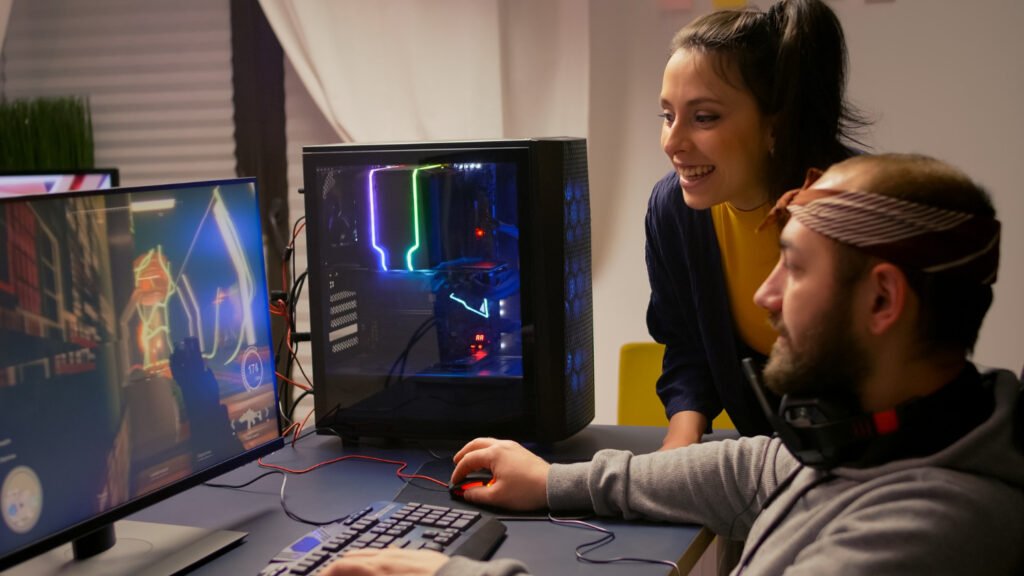
For Gulf studios, this balance is especially important. Many projects aim for high-end visual experiences while also targeting multiple platforms. Well-structured assets ensure that games run smoothly without compromising aesthetic quality.
Cinematic game animation has also raised expectations. Players increasingly expect narrative depth delivered through high-quality cutscenes and in-game storytelling. This requires close alignment between asset creation, animation, and engine integration.
What Gulf Gaming Studios Prioritise
Technical Compatibility and Engine Readiness

Studios across the region place strong emphasis on engine compatibility. Unreal Engine has become a preferred platform for many teams due to its real-time rendering capabilities and cinematic tools.
When working with external partners or internal teams, Gulf studios expect 3D assets to be optimised for Unreal Engine workflows. This includes correct scaling, clean topology, efficient textures, and proper rigging. Technical readiness reduces integration time and supports faster iteration.
Visual Consistency and Style Control
As regional studios develop original IP, maintaining a consistent visual style is critical. 3D game assets must align with defined art directions and narrative themes.
Gaming animation studios in the Gulf look for partners who understand how assets contribute to a cohesive visual language. This consistency supports brand identity and helps games stand out in crowded marketplaces.
Performance and Optimisation
High visual quality alone is not enough. Assets must be optimised for performance across platforms. This includes efficient polygon counts, texture atlasing, and LOD management.
For Middle East studios targeting international audiences, performance standards must meet global expectations. Poor optimisation can undermine even the most visually impressive projects.
Cinematic Animation and Narrative Expectations
Cinematic game animation plays an increasingly important role in Gulf game development. Storytelling is becoming a differentiator as studios move beyond casual or experimental projects.

Cinematics require assets that hold up under close scrutiny. Facial detail, realistic movement, and environmental depth all contribute to narrative credibility. This level of quality demands collaboration between animators, technical artists, and creative directors.
In 2026, cinematic animation is not confined to cutscenes. Real-time storytelling within gameplay has become equally important, blurring the line between cinematic and interactive experiences.
Collaboration Models in the Gulf
Game development in the Middle East often involves hybrid collaboration models. Studios may work with internal teams, regional partners, and international specialists simultaneously.
In this environment, clarity and documentation are essential. Gulf studios value partners who can deliver assets with clear naming conventions, structured files, and predictable workflows. This operational discipline supports scalability and reduces friction as teams grow.
The Growing Role of Unreal Engine in Dubai
Dubai has emerged as a regional hub for real-time content creation. Unreal Engine’s adoption has extended beyond gaming into architecture, film, and immersive experiences.
For game developers, this cross-industry familiarity has raised expectations. Teams working with Unreal Engine in Dubai expect assets that can move seamlessly between development, marketing, and presentation contexts. This versatility adds value beyond the game itself.
Our Perspective
At Studio Image Works, game development and 3D asset creation are approached with the same discipline applied to complex visual communication projects. The focus is on building assets that are technically robust, visually coherent, and ready for real-time environments.
By aligning creative direction with engine requirements and performance considerations, 3D assets become reliable components within larger development pipelines. This approach supports Gulf studios aiming to create cinematic, globally competitive gaming experiences.
The Result
In 2026, game development in the Middle East is defined by ambition and increasing maturity. Gulf studios are setting higher standards for 3D game assets, cinematic animation, and technical integration.
What studios look for is not just artistic talent, but an understanding of systems, performance, and narrative. As tools like Unreal Engine continue to shape workflows in Dubai and beyond, the ability to deliver engine-ready, visually consistent assets will remain critical.
For studios seeking global relevance, disciplined 3D asset creation is no longer optional. It is foundational to building immersive, competitive games that resonate with players worldwide.