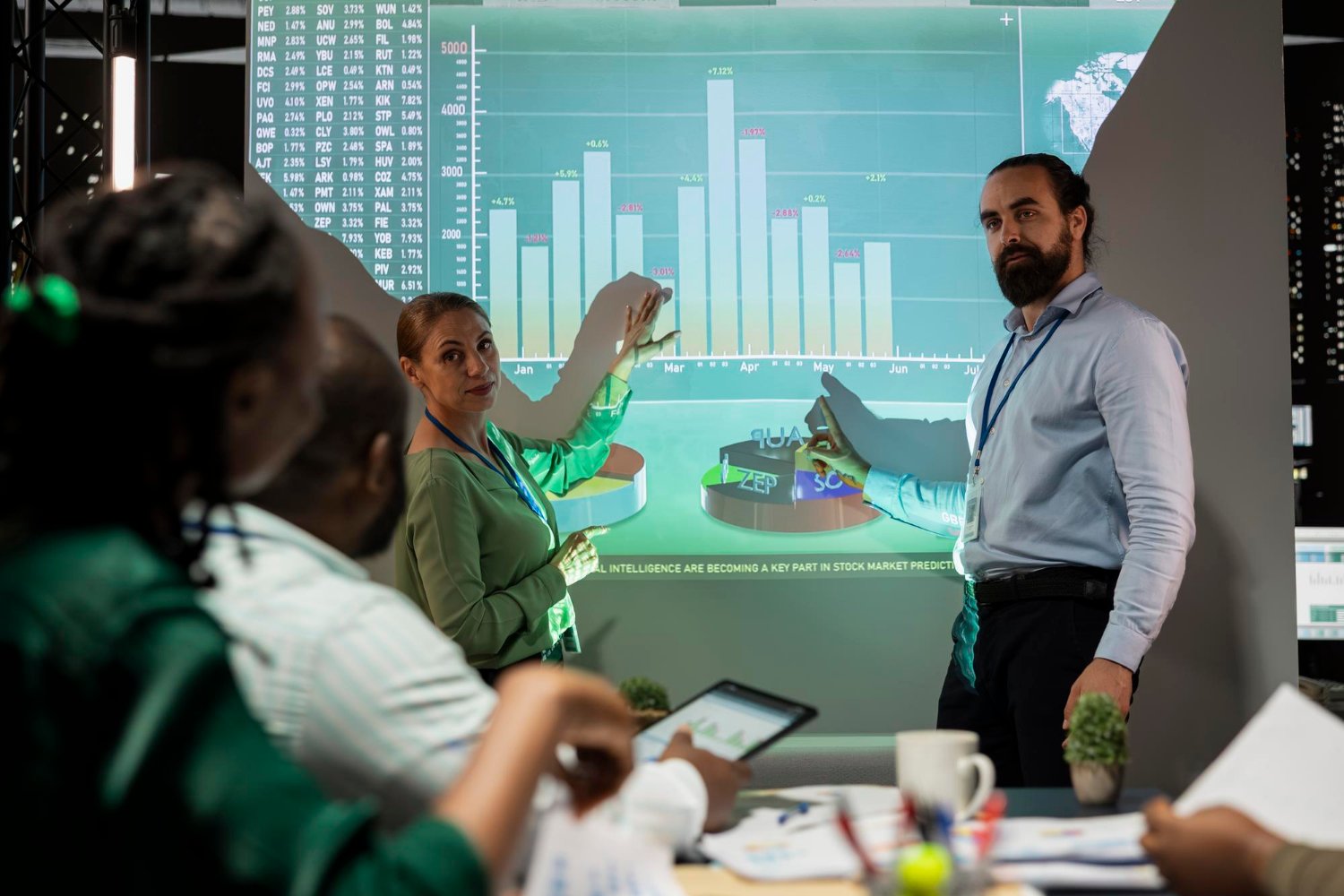


Across the Gulf region, enterprises are being asked to communicate more complex ideas to broader audiences, faster than ever before. From industrial systems and infrastructure projects to digital services and large-scale developments, the challenge is no longer access to information, but clarity of understanding. Traditional communication tools often struggle to convey scale, process, or future-state scenarios. In response, many Gulf enterprises are turning to immersive technologies. In 2026, 3D visualization, augmented reality, and virtual reality have become practical instruments for both marketing and training.
Why This Topic Matters Today
The Gulf is experiencing accelerated transformation across sectors such as energy, construction, manufacturing, logistics, and smart cities. Enterprises operating in this environment face high expectations from investors, regulators, partners, and employees.
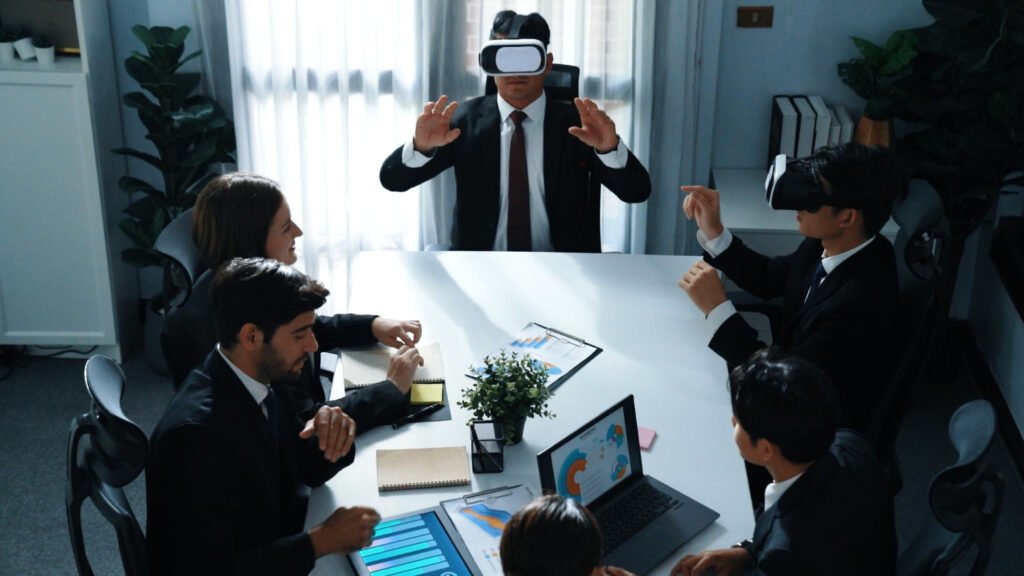
At the same time, global competition demands that regional organisations communicate at international standards. 3D visualization in the Gulf and AR VR enterprise solutions in the UAE provide a way to explain complex systems clearly, align stakeholders early, and reduce misunderstanding.
For many enterprises, immersive media is no longer about innovation signalling. It is about operational efficiency, risk reduction, and effective knowledge transfer.
What Immersive Technologies Enable
3D Visualization for Clarity and Alignment
3D visualization allows enterprises to represent physical and digital systems accurately before they are built or modified. This capability is particularly valuable in the Gulf, where large-scale projects and long planning cycles are common.
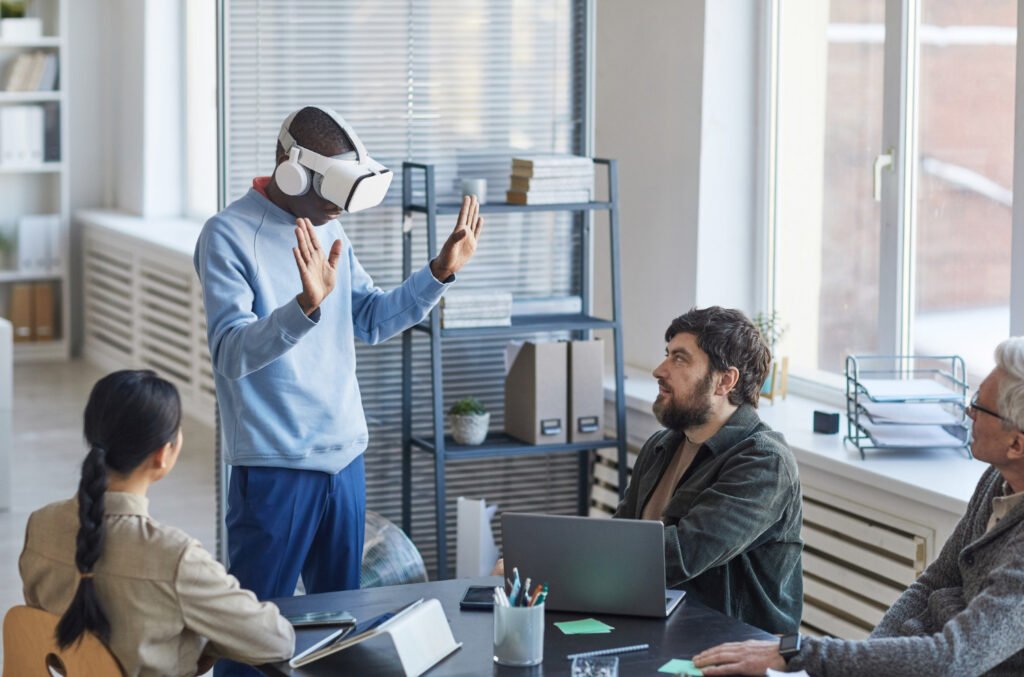
Through detailed 3D models and animations, stakeholders can understand spatial relationships, processes, and design intent quickly. This reduces ambiguity and supports better decision-making.
In marketing contexts, 3D visualization enables enterprises to present future-ready visions convincingly to global audiences. In training contexts, it provides a visual reference that supports learning and retention.
AR and VR in Enterprise Environments
Augmented reality and virtual reality offer different but complementary benefits. AR overlays digital information onto real-world environments, supporting tasks such as maintenance, inspection, and guided training. VR creates fully immersive environments for simulation, walkthroughs, and experiential learning.
AR VR enterprise solutions in the UAE are increasingly used to standardise training, improve safety, and support distributed teams. These tools allow employees to practice procedures and explore environments without physical risk or logistical constraints.
Immersive Marketing in the Middle East
Marketing for Gulf enterprises often involves communicating scale, innovation, and long-term vision. Immersive marketing in the Middle East allows brands to move beyond static presentations and invite audiences into interactive experiences.
Virtual showrooms, interactive product demonstrations, and immersive project walkthroughs help international stakeholders understand offerings without travel. This approach is particularly effective for enterprises operating across borders or targeting global investors.
By allowing audiences to explore rather than observe, immersive marketing builds engagement and confidence, supporting faster decision-making.
Digital Twins as Strategic Assets
Digital twins are increasingly central to enterprise strategies in the Gulf. A digital twin is a dynamic, data-driven 3D representation of a physical asset or system.
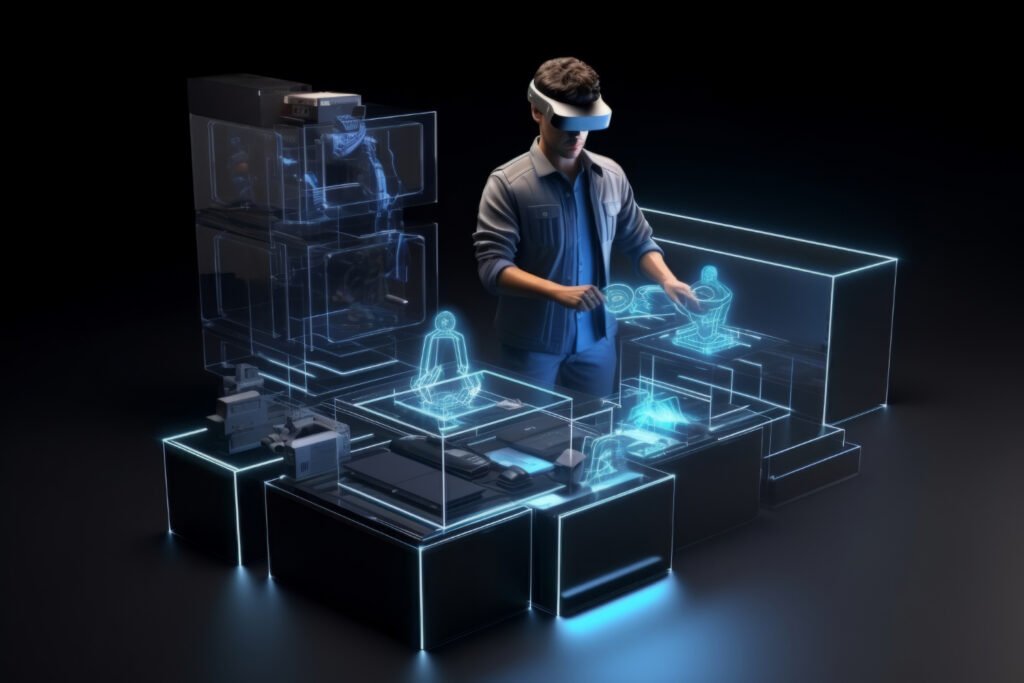
Enterprises use digital twins to monitor performance, simulate scenarios, and plan upgrades. In training, digital twins provide a realistic environment for learning system behaviour. In marketing, they help communicate technical sophistication and operational transparency.
As digital twin adoption grows in the Gulf, integration with VR and AR enhances their value, enabling immersive interaction with real-time data.
Industrial VR in Dubai
Dubai has become a hub for industrial VR applications. Industries such as energy, aviation, logistics, and manufacturing use VR to train employees, simulate operations, and improve safety outcomes.
Industrial VR in Dubai supports experiential learning, allowing teams to rehearse procedures and respond to scenarios that would be costly or dangerous to replicate physically. This reduces incidents, improves preparedness, and supports regulatory compliance.
For enterprises, the return on investment lies in reduced downtime, fewer errors, and more confident teams.
Choosing the Right Immersive Approach
While interest in immersive technologies is growing, successful adoption depends on clear objectives. Not every use case requires full VR immersion, and not every challenge is solved by AR overlays.
Gulf enterprises benefit from assessing where immersive technologies add measurable value. This includes identifying communication gaps, training inefficiencies, or stakeholder alignment challenges that traditional tools cannot address.
The most effective projects are those where 3D visualization, AR, or VR are integrated into existing workflows rather than introduced as standalone experiences.
Our Perspective
At Studio Image Works, immersive technologies are applied with a focus on clarity, accuracy, and usability. Whether developing 3D visualization for enterprise communication or AR and VR solutions for training, the emphasis is on solving real-world challenges.
Projects are approached as long-term communication systems rather than one-time demonstrations. By aligning immersive content with enterprise objectives, these tools become practical assets that support marketing, training, and operational understanding across the Gulf.
The Result
In 2026, Gulf enterprises are investing in 3D visualization, AR, and VR not for novelty, but for impact. These technologies provide clarity where complexity exists, support consistent training, and enable immersive marketing that resonates with global audiences.
As digital twins, industrial VR, and immersive enterprise solutions continue to mature, their role in the Middle East will expand. For organisations navigating rapid growth and transformation, immersive technologies have become essential tools for communication, alignment, and long-term success.